The FBI Just Warned About Kali365: Why MSPs Need to Think Beyond MFA
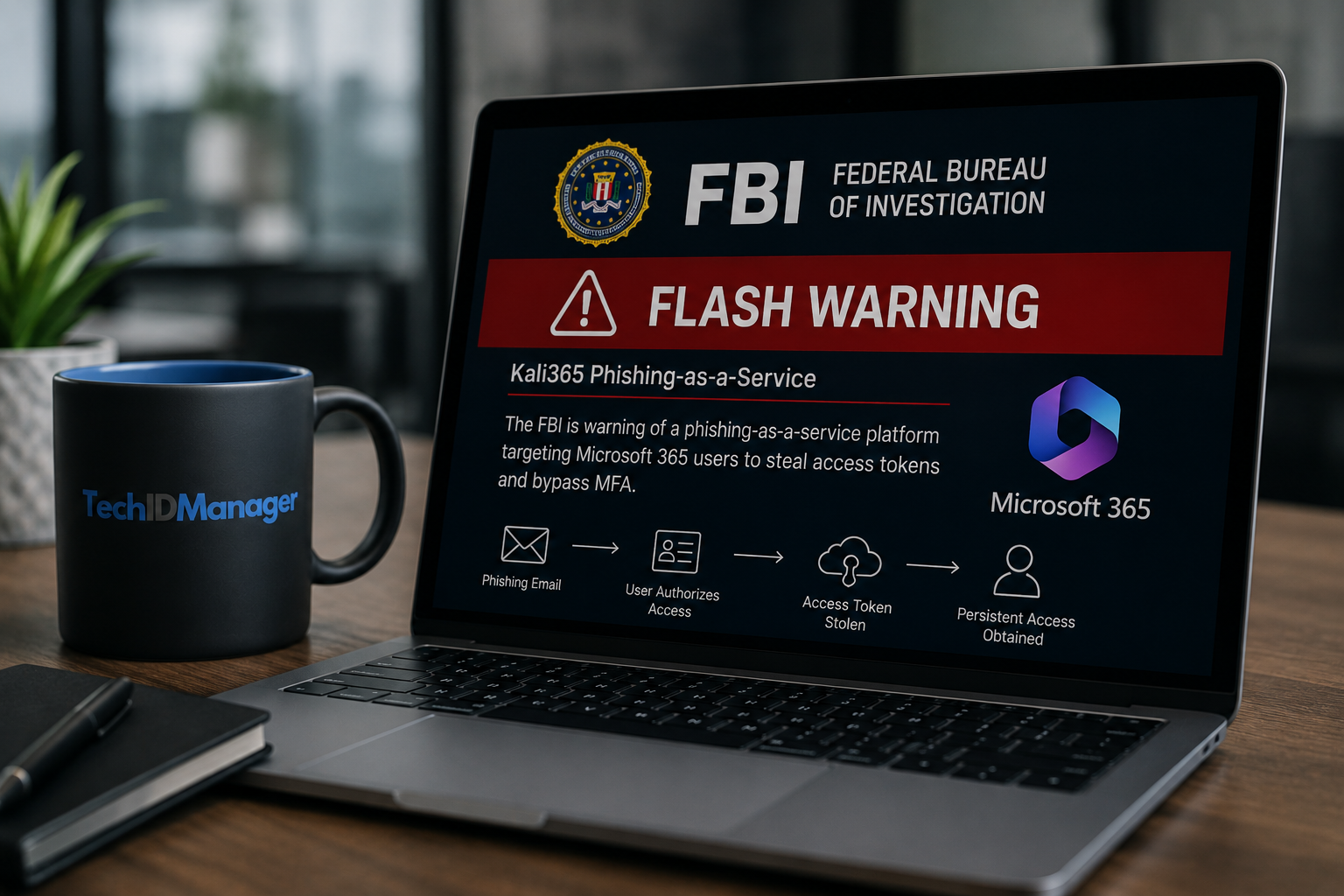
The FBI recently issued a public warning about an emerging phishing-as-a-service platform called Kali365, a threat specifically targeting Microsoft 365 environments. Unlike traditional phishing attacks that steal passwords, Kali365 focuses on stealing access in a different way: by tricking users into unknowingly authorizing attacker access to their Microsoft 365 environment.
And for MSPs, this warning highlights something important:
MFA alone is no longer enough.
What Is Kali365?
According to the FBI, Kali365 is a phishing-as-a-service (PhaaS) platform first identified in April 2026 and distributed primarily through Telegram. It enables attackers to obtain Microsoft 365 access tokens and bypass MFA protections without intercepting usernames or passwords.
In simple terms:
Instead of stealing credentials, attackers steal authorized access.
The attack typically works like this:
-
A user receives a phishing email impersonating a trusted cloud productivity or document-sharing service.
-
The email instructs the user to visit a legitimate Microsoft verification page and enter a device code.
-
The victim unknowingly authorizes the attacker’s device.
-
The attacker gains persistent access to Microsoft 365 services like Outlook, Teams, and OneDrive—without needing a password or additional MFA prompts.
This matters because many organizations still assume:
“We have MFA, so we’re safe.”
The reality is more complicated.
The Bigger Lesson: Assume Identities Can Be Compromised
Kali365 reinforces an uncomfortable truth in cybersecurity:
Identity is now the attack surface.
Attackers increasingly target access, authorization, sessions, tokens, and trust relationships—not just passwords.
For MSPs, the stakes are even higher.
A compromised technician identity often represents access to multiple environments, client systems, privileged roles, and sensitive data. In many organizations, one overprivileged account can become an attacker’s path to widespread damage.
The question MSPs should ask is no longer:
“Can someone compromise an identity?”
The better question is:
“What happens if they do?”
Why Least Privilege Matters More Than Ever
No security control eliminates risk completely.
But security architecture can dramatically reduce the blast radius.
When a technician account is compromised, what that attacker can actually do matters.
Can they access every client?
Do they have standing admin privileges?
Can they move laterally across environments?
Can they access privileged systems indefinitely?
This is where least privilege and just-in-time access become critical.
Instead of maintaining permanent elevated permissions, access should be:
-
Scoped to the task
-
Limited to the minimum rights required
-
Temporary when possible
-
Fully attributable to an individual technician
The goal is not pretending compromise can never happen.
The goal is limiting what compromise becomes.
What This Means for MSPs
The FBI’s warning should push MSPs to revisit some difficult questions:
-
Are technicians using unique accounts or shared admin credentials?
-
Are privileged permissions always standing, or enabled only when needed?
-
Can technician activity be individually traced?
-
How quickly can access be revoked?
-
How much damage could a single compromised technician identity cause?
These questions matter because attackers increasingly target identity systems rather than infrastructure directly.
When access becomes the target, access management becomes security.
Where TechIDManager Fits
The FBI warning is not about password theft in the traditional sense. Kali365 abuses authorization and token trust relationships rather than intercepting credentials. TechIDManager is not designed to “stop Kali365,” and claiming otherwise would be misleading.
But the advisory reinforces why TechIDManager was built the way it was.
TechIDManager helps MSPs reduce the impact of identity compromise through:
-
Unique technician accounts
-
Least-privilege access models
-
Just-in-time account access
-
Automated account lifecycle management
-
Auditable technician accountability
-
Fast access removal and password rotation
Because the reality is simple:
If an identity is compromised, minimizing privilege and limiting blast radius matters.
Where MSPs Go From Here
The FBI warning about Kali365 is not a reason to panic.
It is a reminder.
Modern attacks increasingly target identity, trust, and authorization—not just passwords.
MFA still matters. Security awareness still matters. Conditional access policies still matter.
But MSPs should also assume that identities may eventually be compromised and build systems that contain damage when that happens.
Because in modern cybersecurity, the question is no longer:
“Will attackers target privileged access?”
They already are.
The question is:
“How much can they do when they get it?”
Schedule a demo to see how TechIDManager helps MSPs automate privileged account management with unique credentials, centralized auditing, and immediate access control across customer environments.